
Why the Energy Industry May Be Talking About Battery Storage the Wrong Way
September 2026 Blog | By Joseph Tassone Jr.
In 1993, the milk industry stopped telling Americans why milk was good for them and started showing them what happened when they didn’t have it. The old message was “Milk: It Does a Body Good.” It was positive, factual, and easy to understand. Milk was nutritious, helped build strong bones, and was good for you. One problem: most people already knew that, and the campaign did not move the needle.
Then the California Milk Processor Board and its advertising agency approached the problem from a completely different angle. Instead of telling consumers about the benefits of having milk, they showed them the frustration of not having it. “Got Milk?” was born.
One famous commercial featured a history buff who asked who shot Alexander Hamilton. He knows the answer: Aaron Burr. But with a mouthful of peanut butter, nobody can understand him. He reaches for milk. The carton is empty. Got Milk?
The brilliance of the campaign wasn’t in explaining the benefits of milk. It was in deprivation. Don’t tell people why they should want something. Put them in a situation where they suddenly understand what happens when they don’t have it. In one year, sales went from declining to increasing by 7%. A success!
More than 30 years later, I wonder whether this story offers a lesson for the energy industry, particularly battery energy storage. Are we explaining BESS backward?
For many Americans, the term Battery Energy Storage System, or BESS, means virtually nothing. For those who have heard about BESS, the introduction may not have been positive: a proposed facility, a battery-fire video, alarming terminology, or a frightened parent asking what happens if something goes wrong near her home.
How does our industry typically respond? We explain the technology. We discuss UL testing, NFPA standards, fire codes, setbacks, monitoring systems, and emergency response plans. We bring engineers and experts to public hearings. We need to do those things. Safety questions deserve serious, factual answers. But are we making the same mistake the milk industry made? In effect, we’re saying: “BESS: It Does the Grid Good.”
But then we wonder why the message isn’t resonating. One important difference separates milk from battery storage. By 1993, consumers already understood milk. They knew what it was and generally believed it was good for them. BESS doesn’t have that advantage. Many people don’t understand what it is. Others have already been exposed to negative information about it.
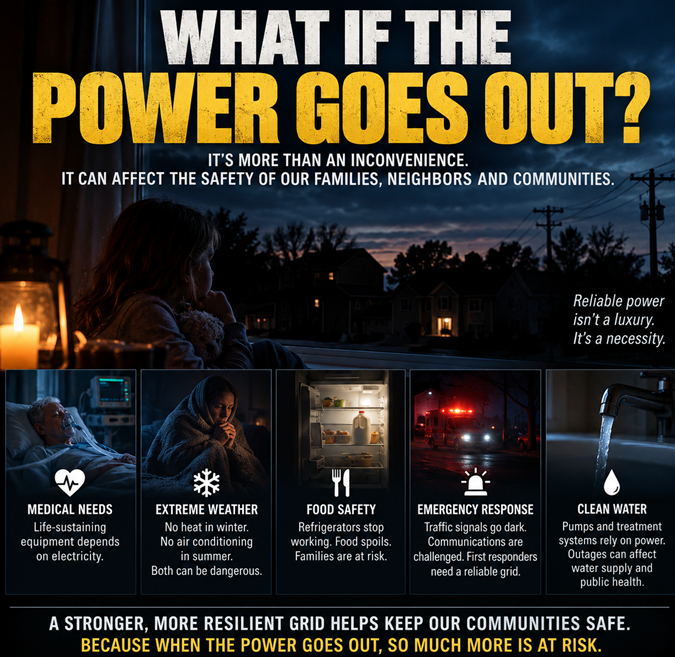
So, before we explain the benefits of battery storage, perhaps we should begin with something everyone already understands: What happens when the power goes out?
At first, it’s inconvenient. The television and Wi-Fi go dark. The refrigerator stops cooling. Now extend that outage to six hours, twenty-four hours, or several days, during a heat wave or extreme cold. What happens to an older adult who depends upon electrically powered medical equipment? What happens to refrigerated food and medicine, communications, traffic signals, water systems, businesses, and emergency services?
The longer the outage lasts, the less this becomes a conversation about convenience and the more it becomes a conversation about public safety. Electricity isn’t a luxury. It is infrastructure upon which virtually every other piece of modern infrastructure depends. That’s something people understand.
Once we establish the problem, explaining storage becomes considerably easier. Electricity must be available when people need it, but demand changes throughout the day. In comes battery storage: Charge. Store. Discharge. You don’t need an MIT professor and a 40-slide presentation to understand those three words. The point is simple: a reliable electric system needs resources that can provide electricity when the system needs it. Storage can be one of those resources.
Reliability Is a safety Issue. I believe this is where our industry can communicate differently. We often put energy issues into separate buckets: climate, affordability, reliability, and safety. But reliability is a safety issue.
Electricity matters during extreme weather. It matters to vulnerable populations. It matters to hospitals, first responders, communications systems, businesses, and critical infrastructure. That is a fundamentally different conversation than telling a community that New York needs additional megawatts of storage to achieve a statewide policy objective. One is about energy policy. The other is about people.
And what about affordability? We need to talk about it. Energy affordability hits households and businesses every month. Storage also has a legitimate economic case: it can shift electricity to higher-demand periods, reduce reliance on expensive peak generation, and potentially avoid or defer certain infrastructure investments.
But I would be very cautious about leading with: “BESS will lower your electric bill.” Think about what happens next. A resident looks at their latest utility bill and says, “Really? Then why does my bill keep going up?” Now we’re explaining wholesale markets, transmission, congestion, and long-term system savings. We’re back to the MIT professor.
Compare that with: What happens when the power goes out? No economist required. Everybody understands it. Affordability should absolutely be part of the pitch: The electric grid is outdated, our lives are increasingly more electrified and rates are rapidly rising. Storage can help curtail that. Still, I believe it falls behind reliability and safety as the emotional case for why that system matters.
Climate change and cleaner air matter, and storage can help integrate renewable generation. But climate change does not always need to be the opening argument. Climate impact can feel distant and can be a hot button topic in itself. That is not an argument to stop talking about climate; it is an argument for understanding what resonates with people. We risk overshadowing more immediate issues such as reliability, resilience, and public safety.
At onCORE, we spend much of our time on the front lines of energy development, engaging property owners and communities. And I’ve seen this movie before. Earlier in my career, I worked in the wireless telecommunications industry. When cell towers were proposed, residents sometimes arrived at public hearings worried about radiofrequency emissions and their children. We brought engineers, studies, FCC standards, and RF experts. Sometimes we still lost.
When a mother stands at a microphone and says, “I’m afraid this tower is going to hurt my children,” she isn’t making an engineering argument. She’s making a human one. Eventually, we learned there was another human story: What happens when someone needs to call 911, and there is no service? What happens when your daughter has an accident and can’t make a call? What happens during an emergency? Suddenly, the conversation wasn’t simply fear versus engineering. Another question emerged: What are the consequences of not having the infrastructure?
Case Study from the Wireless Industry: I saw a powerful example of this in the early 2000s involving a proposed cell tower in a town in Orange County, New York. The town had supported the project, but opponents ultimately forced the issue to a public vote. Instead of responding with more technical information, a colleague went into the community, met with parent organizations including the PTA, and asked a simple question: Don’t you want your children to be able to make a phone call if something happens? Parents understood that concern. The PTA became engaged, parents spoke with other parents, and people with a reason to support reliable service participated. According to the campaign’s firsthand account, the measure prevailed by a large margin. The lesson wasn’t that science didn’t matter. It was that facts answered the argument, but the story gave people a reason to care.
Who Is the PTA for Battery Storage? Who has an authentic reason to care about reliable electricity? First responders, emergency management professionals, hospitals, senior organizations, schools, businesses, critical infrastructure operators, and residents who have experienced prolonged outages all come to mind. The answer will differ by community.
I am not suggesting manufactured grassroots support – quite the opposite. Find people who genuinely understand why reliable electricity matters and make sure their voices are part of the conversation. Otherwise, we can find ourselves at a public hearing with 75 frightened residents on one side and a developer with three engineers on the other. Guess which side feels more like the voice of the community when it comes time for the board to make its decision? You have to win hearts, not just minds!
Maybe “Got Power?” is too cute. Maybe it isn’t. But the lesson behind it isn’t cute at all.
The milk industry showed that the consequence of not having something can be more powerful than explaining its benefits. Battery storage has a harder challenge. We need to explain BESS, answer legitimate safety concerns, correct misinformation, insist upon strong codes and emergency planning, and earn community trust.
People may never understand every detail of the electric grid. They don’t need to. They want the lights on, homes heated and cooled, food and medicine refrigerated, hospitals and emergency services functioning, businesses open, and families safe. The electric grid is largely invisible until it stops working.
More than 30 years ago, milk became memorable not because somebody explained calcium. It became memorable when a guy ate a peanut butter sandwich and discovered the milk carton was empty. Maybe there’s a lesson in that for all of us.
Facts can win an argument. But if we want communities to understand why energy infrastructure matters, we also must win hearts.
Joe Tassone Jr. is the founder and a principal of onCORE Origination, with 30 years of project development experience and expertise in renewable energy development. Visit www.oncoreorig.com for more information.